Raising Cane’s Chicken Finger Size – How Big Are They?
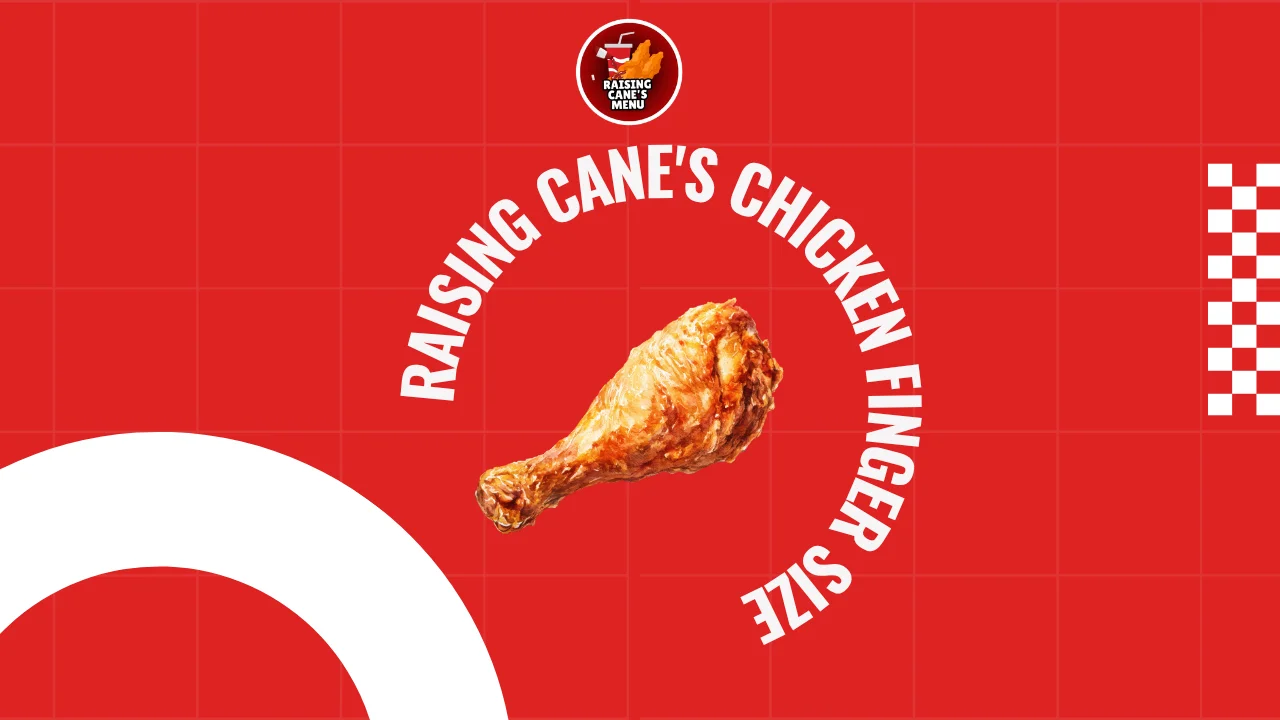
Raising Cane’s is famous for its crispy chicken fingers, but many diners wonder how big each strip really is. Understanding the weight and dimensions of these tenders helps you judge portion sizes and value. This guide explores the standard measurements, compares combo servings, examines the cut of meat used, and addresses rumours about shrinking sizes. Read on for a full breakdown of Raising Cane’s chicken finger size.
Understanding the Standard Chicken Finger
Weight and Nutritional Facts
Raising Cane’s uses boneless chicken tenderloins for its fingers. Independent menu analyses report that each fried finger weighs about 1.9 ounces and contains around 130 calories. This portion yields 6 grams of fat, 5 grams of carbohydrates and 13 grams of protein, making it a relatively lean piece of fried chicken. Nutritional guides list sodium at about 190 milligrams per finger and cholesterol at 40 milligrams, so a single finger can fit into a balanced meal when paired with lighter sides. The table below summarizes these figures.
| Metric | Approximate value per chicken finger |
|---|---|
| Weight | 1.9 oz (≈55 g) |
| Calories | ~130 calories |
| Fat | ~6 g |
| Carbohydrates | ~5 g |
| Protein | ~13 g |
| Sodium | ~190 mg |
Length, Width and Thickness
Beyond weight, shape also influences the dining experience. A food critic comparing tenders from multiple chains measured his Raising Cane’s strips and found that they averaged about 4 inches long and 1.5 inches wide. Height wasn’t a significant factor, as tenders from several chains were similar in thickness. Though each finger is hand‑battered and may vary slightly, this measurement suggests that Cane’s strips are longer and wider than typical fast‑food chicken strips. The generous size contributes to the signature crunchy texture and juicy interior.
Portion Sizes in Combos and Packs
Raising Cane’s offers its chicken fingers in individual combos and bulk packs. Knowing how many ounces of chicken you receive in each order can help you decide which option provides the best value.
Combos: 3, 4 and 6 Fingers
Combo meals pair chicken fingers with fries, Texas toast, coleslaw and a drink. Since each finger weighs around 1.9 ounces, the 3‑Finger Combo provides roughly 5.7 ounces of chicken, the Box Combo with four fingers offers about 7.6 ounces, and the Caniac Combo with six fingers delivers around 11.4 ounces. As you upgrade to a larger combo, the cost per finger generally decreases, making the Caniac a strong value if you have a hearty appetite or plan to share. The sides remain constant—one slice of toast, a serving of fries and coleslaw—so the jump in portion comes entirely from the additional fingers.
Tailgate Packs and Catering
For groups, Raising Cane’s sells Tailgate packs of 25, 50, 75 and 100 fingers. With each finger still weighing about 1.9 ounces, a 25‑finger pack includes roughly 47.5 ounces of chicken, while the 100‑finger pack contains around 190 ounces. These bulk options lower the price per piece compared with combo meals and are ideal for parties or meal prepping. Catering trays include sides and sauces, ensuring consistent portion sizes for events without needing to calculate per‑person servings.
Tenderloin Quality and Cut
Raising Cane’s founder attributes the chain’s success to using high‑quality chicken tenderloins rather than generic breast strips. In interviews, he explained that the restaurant selects specific breeds to produce tenderloins that average around two ounces each, ensuring consistency and flavor. Tenderloins come from the small muscle attached to the chicken breast and are prized for their tenderness. Because the muscle isn’t heavily used, it yields meat that stays moist when fried. This careful sourcing, along with 24‑hour marination and hand‑battering, helps keep finger sizes uniform and taste consistently juicy.
Shrinkflation Debate: Are Fingers Getting Smaller?
Customer Perceptions and Comments
Social media is filled with claims that Raising Cane’s chicken strips have shrunk. A viral video from 2024 suggested that the tenders now look like nuggets. Commenters argued that they used to be over 2 ounces but are now between 1.6 and 1.8 ounces. These observations fueled accusations of shrinkflation—where companies reduce product size while maintaining the same price. Consumers often notice price hikes sooner than subtle size reductions, leading to strong reactions when they believe portions have diminished.
Employee Insights and Reality
In response to the online debate, self‑identified Raising Cane’s employees explained that finger size can vary by supplier. One worker said that weekly shipments sometimes deliver smaller strips and other times larger ones, with weights ranging between 1.4 and 2.3 ounces. This range reflects natural variation in poultry and suggests there hasn’t been a deliberate effort to shrink servings. Independent reviewers weighing tenders have measured them at 1.69 ounces on average, which aligns closely with the 1.9‑ounce figure quoted by nutrition guides. Given this context, most customers still receive substantial pieces, though occasional fluctuations are normal.
How to Get the Best Portion
Opt for Larger Combos or Bulk Packs
If cost per ounce matters to you, opt for the bigger orders. The Caniac Combo lowers the price per finger compared with smaller combos. Tailgate packs drop the price even further, making them cost‑effective for families, parties or meal prep. You can store leftover fingers in an airtight container and reheat them in an air fryer to retain crispiness.
Customize Your Order
Raising Cane’s allows you to customize combos. You can substitute coleslaw for an extra piece of toast or fries at no additional cost. Ordering individual fingers à la carte is also possible if you want more protein without the sides. Each extra finger adds about 1.9 ounces of chicken and costs roughly the same as those included in combos. Splitting a larger combo among friends or family can be cheaper than buying multiple smaller combos.
Watch for Specials and App Deals
While menu prices fluctuate by location, the chain sometimes offers promotions through its mobile app or during special events. Signing up for the loyalty program can yield occasional coupons or free fingers with the purchase of a combo. Keep an eye on local offers to maximize value.
FAQs
Each finger weighs about 1.9 ounces, measuring roughly 4 inches long and 1.5 inches wide. Sizes can vary slightly because the chicken is hand‑battered.
Finger sizes vary due to natural differences in chicken tenderloins and sourcing from different plants. Employee accounts report weights ranging from 1.4 to 2.3 ounces.
The chain uses premium chicken tenderloins. Its founder states that selecting the right breed and tenderloin size (around two ounces) is key to consistent quality.
The Caniac Combo generally provides the lowest cost per finger, with six strips totalling about 11.4 ounces of chicken. Tailgate packs deliver an even lower price per piece for larger groups.
Some customers believe so, but evidence suggests natural variation rather than deliberate downsizing. Independent weight measurements hover around 1.7–1.9 ounces, close to the published figure. Fluctuations may occur, yet the average size remains consistent.
Conclusion
Raising Cane’s chicken fingers are known for their generous size and tender texture. Each finger weighs about 1.9 ounces and measures roughly 4 inches by 1.5 inches, delivering 130 calories and a satisfying amount of protein. Combo meals scale the portion from three to six fingers, while tailgate packs provide bulk options for groups. Although some customers perceive shrinkage, employees and independent tests indicate that weights vary naturally between 1.4 and 2.3 ounces. By choosing larger combos or tailgate packs and customizing sides, you can maximize value and ensure you get the most chicken for your money. Whether you’re a long‑time fan or a first‑time diner, understanding Raising Cane’s chicken finger size helps you order with confidence and enjoy every crispy bite. Check Best Keto Options at Raising Cane’s in 2026